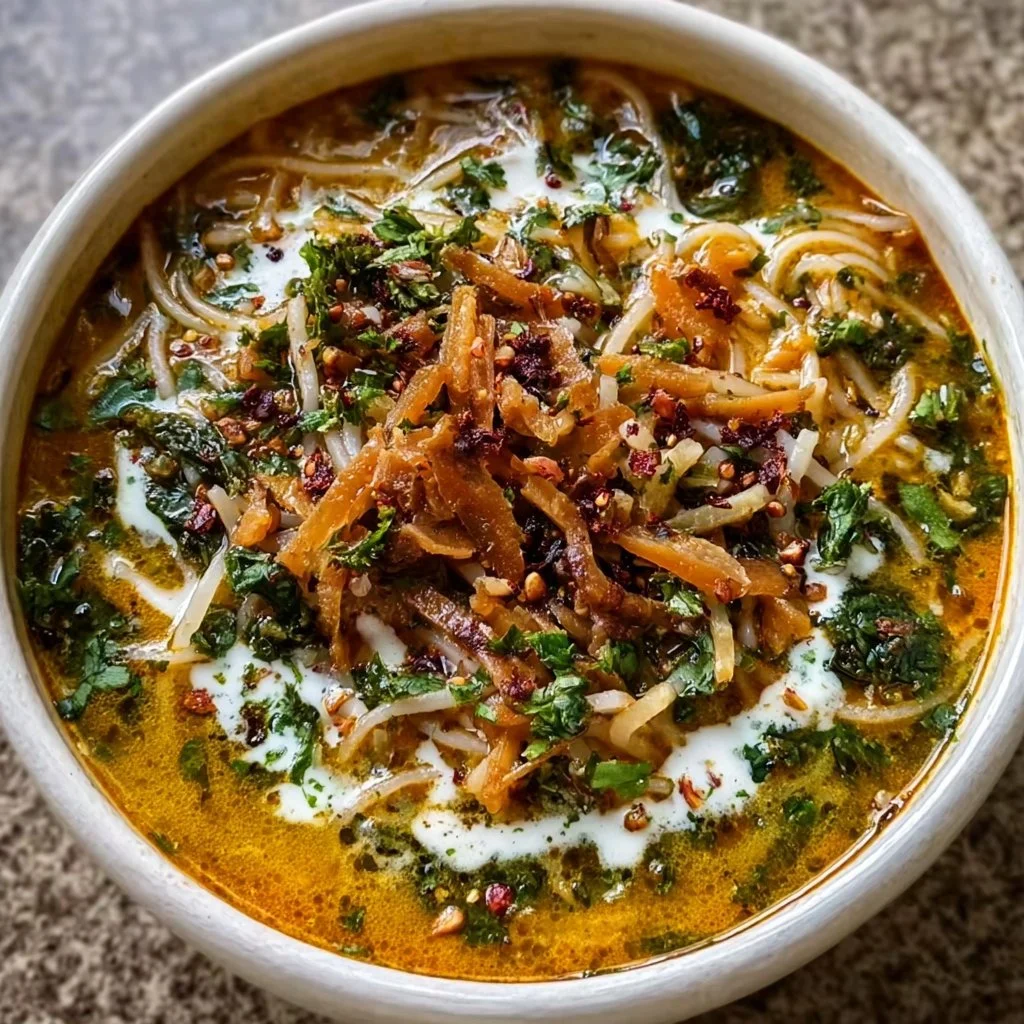
Persian Noodle Soup Recipe: Cozy Ash Reshteh to Warm Your Soul
While we have provided a jump to recipe button, please note that if you scroll straight to the recipe card, you may miss helpful details about ingredients, step-by-step tips, answers to common questions and a lot more informations that can help your recipe turn out even better.
My strongest kitchen conviction — besides the sacredness of good butter and the absolute necessity of a baking sheet — is that Ash Reshteh (Persian noodle soup) should be your emotional support meal. Full stop. Standing ovation. No debate.
Confession: How I almost ruined a holiday with Persian Noodle Soup and survived
Okay, so picture this: Thanksgiving, 2017, my attempt at fusion diplomacy (cranberry sauce meets experimental soup) and me, wielding a ladle like a misguided general. I added the wrong herb (long story: Trader Joe’s had a sale and I panicked) and the entire family politely nibbled while exchanging that face people make when they respect lineage but not flavor. It was a debacle, and yet: Ash Reshteh later rescued my reputation because its layers of beans, herbs, and noodles are the kind of thing that says, “I am soulful, I am humble, I will fix you.” Also, there was a lemon bars disaster of 2021 (let’s never, ever go there). Mini-therapy: cooking heals. Mostly.
Okay, pivot back to the recipe (because soup waits for no melodrama)
ANYWAY, before I spiral into family lore and emotional pantry-cleanouts, let’s talk actual soup. This Persian Noodle Soup — Ash Reshteh — is thick, herby, and supremely comforting, the kind of dish you make when you want to impress in a low-effort, high-emotion way. Highly recommend pairing with carbohydrates. Always carbs. Friendly reminder: if you’re looking for a famous fallback breakfast recipe when this goes too right and you’re suddenly hosting brunch, try this egg-free pancake recipe — it saved me after my last hosting catastrophe.
What you need (ingredients, but with dramatic flair):
- 2 tablespoons olive oil
- 1 large onion, diced
- 4 cloves garlic, minced
- 1 teaspoon turmeric
- 6 cups vegetable broth
- 1 cup lentils, rinsed
- 1 cup chickpeas, cooked
- 1 cup navy beans, cooked
- 1 cup kidney beans, cooked
- ½ pound Persian noodles or linguine
- 3 cups spinach, chopped
- 1 cup cilantro, chopped
- 1 cup parsley, chopped
- 1 cup dill, chopped
- Salt and pepper to taste
- Sour cream or yogurt, for serving
- Fried onions, for garnish
Mini-rant: I love a bargain spice rack from Aldi as much as the next person, but don’t skimp on fresh herbs here — they’re the soul of the soup. Trader Joe’s has great pre-washed greens if you’re exhausted (me, always). Also, canned beans are fine; I’ve cried over dried-bean scheduling decisions. Don’t be me. Buy the cans. Practical.
Cooking Unit Converter — because kitchen math should not be a trauma flashback
If you’re eyeballing cups like it’s a suggestion and not a culinary law, this little tool helps convert with dignity.
Technique: what I actually do (and the things I learned while making multiple messes)
I will never be the person who layers things perfectly from the start; I am a joyful chaos conductor. That said, here’s how I fold the soup into being, with sensory notes and lessons learned the hard way (burned garlic is a moral failing — don’t do it).
- Heat olive oil in a large pot over medium heat. Add diced onion and cook until soft and translucent.
- Stir in minced garlic and turmeric, cooking for 1-2 minutes until fragrant.
- Pour in the vegetable broth, then add the lentils, chickpeas, navy beans, and kidney beans. Bring to a boil, then reduce heat and simmer for 20 minutes.
- Add the Persian noodles (or linguine) to the pot and cook for an additional 10 minutes or until noodles are tender.
- Add chopped spinach, cilantro, parsley, and dill. Stir well, then cook for another 5-7 minutes until the greens have wilted.
- Season with salt and pepper to taste.
- Ladle soup into bowls and top with a dollop of sour cream or yogurt and a sprinkle of fried onions.
Here’s what I learned the hard way: don’t overcook the herbs — they should still feel alive (not mushy), and the noodles will soak up mood as well as broth so slightly undercook them if you think you’ll reheat. Texture matters. Also, fried onions are not optional. They are destiny.
Why this matters to me (an emotional aside with seasoning)
Cooking is how I translate love into tangible objects, like bowls that make people talk slower and smile more. There’s lineage here — Persian friends taught me about reshteh (noodles) and the enormous pride wrapped up in that slurp — and my own Midwest/West Coast mash of holiday potlucks that taught me to bring something that feeds both bodies and stories. It’s comforting, yes, but also identity — a way to say “I belong” without actually saying it, you know?
A tiny anecdote so you don’t think I’m all soup seriousness
Once I tried to impress a date by making Ash Reshteh and forgot to salt the broth. He bravely ate it and then asked, in a voice of concern: “Is this very… spiritual?” We laugh about it now. He’s married. To someone less forgetful. No shade.
Frequently Asked Questions — chaotic but helpful
Sure — swap, sub, rebel — but don’t replace everything with meat because we are honoring vegetarian tradition here; also, beans = comfort + protein, end of story.
Linguine is perfectly acceptable. Reshteh is special, but linguine has dignity and will not shame you at a dinner party (I tested this).
Yes, but undercook the noodles slightly unless you like your soup to be a noodle stew; reheating softens them more — science, sadly.
Absolutely. Freeze in portions (saves your future self) — but add fresh herbs on reheat for brightness. You will thank younger-you later.
You can, but I will judge you gently (and maybe suggest lamb meatballs if you insist). The classic is vegetarian/bean-forward; it’s communal and cozy that way.
Okay, that’s the structure. Quick plug: when you’re baking off the emotional aftermath, I once paired a soup Sunday with these delightful banana bread mini muffins and life became markedly better.
Sometimes recipes are therapy. Sometimes they’re nostalgia dipped in broth. Also, if you want a tiny, portable victory for breakfast after soup-night cleanup, make these mini banana muffins and call it a renaissance.
I will stop now. But also: make the soup. Eat it. Cry a little because good food does that. Then call someone and tell them you made something real. It’s cheaper than therapy and somehow better.
Daily Calorie Needs Calculator — because curiosity about calories is normal and also exhausting
This quick calculator helps estimate your daily calorie needs so you can portion your soul-soup responsibly.
Ash Reshteh
Ingredients
Method
- Heat olive oil in a large pot over medium heat. Add diced onion and cook until soft and translucent.
- Stir in minced garlic and turmeric, cooking for 1-2 minutes until fragrant.
- Pour in the vegetable broth, then add the lentils, chickpeas, navy beans, and kidney beans. Bring to a boil, then reduce heat and simmer for 20 minutes.
- Add the Persian noodles (or linguine) to the pot and cook for an additional 10 minutes or until noodles are tender.
- Add chopped spinach, cilantro, parsley, and dill. Stir well, then cook for another 5-7 minutes until the greens have wilted.
- Season with salt and pepper to taste.
- Ladle soup into bowls and top with a dollop of sour cream or yogurt and a sprinkle of fried onions.