Mediterranean Vegetable Galette: A Flaky, Flavorful Recipe Ready in Under an Hour
While we have provided a jump to recipe button, please note that if you scroll straight to the recipe card, you may miss helpful details about ingredients, step-by-step tips, answers to common questions and a lot more informations that can help your recipe turn out even better.
My most unshakeable conviction in this cursed, beautiful universe—right after “never show up to Thanksgiving with store‑bought gravy”—is that a rustic vegetable galette is the most underrated flex food of all time. It looks fancy, eats like comfort, and yet is secretly just… pizza’s artsy cousin who studied abroad in Greece once and won’t shut up about olives.
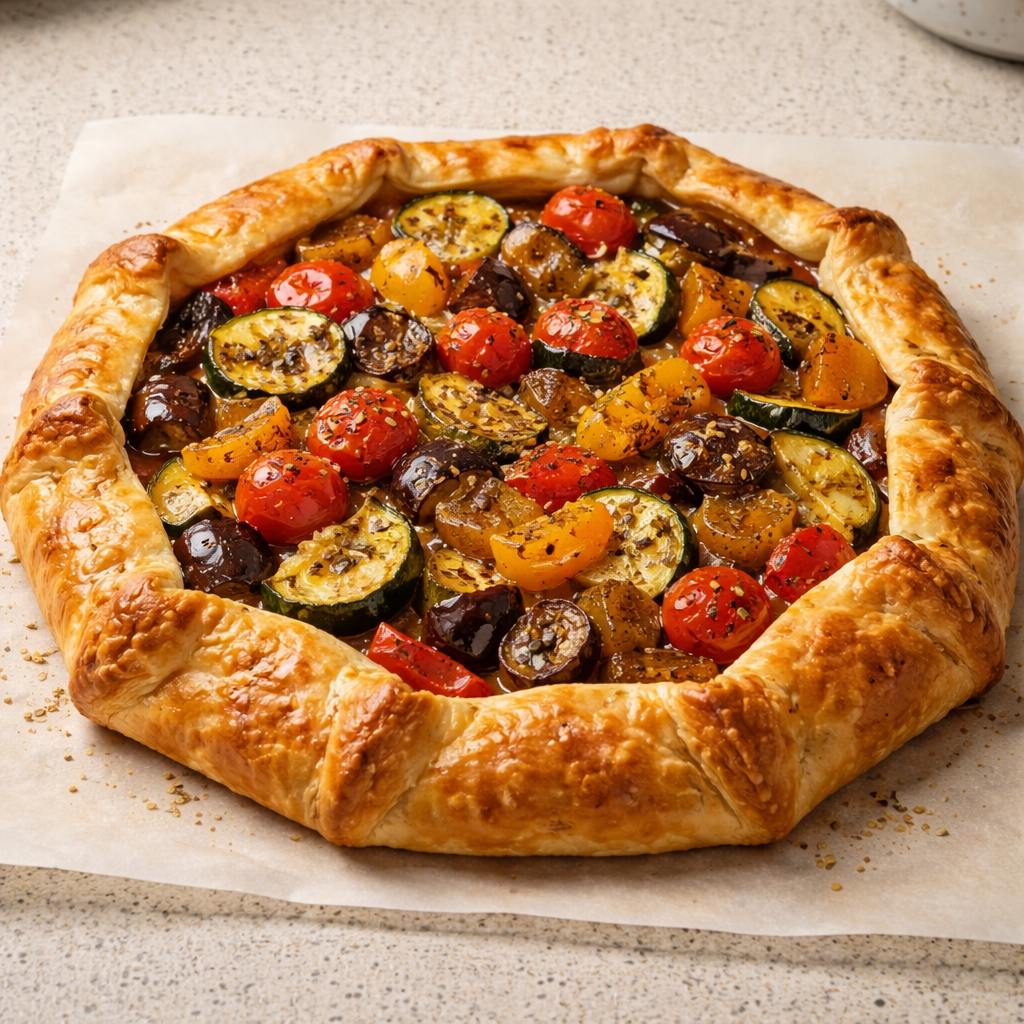
This Mediterranean Vegetable Galette? It’s flaky, colorful, dramatic, and honestly a little too emotionally relatable. One pan, a pile of vegetables, and suddenly you’re the main character in a food movie where the oven light is your spotlight and the puff pastry is your redemption arc.
When the Mediterranean Vegetable Galette and my ego both exploded
Years ago, I tried to impress my in‑laws with what I bravely called “a rustic tart situation.” What emerged from the oven looked like a lasagna fell off a truck. The crust collapsed, the filling broke free like it had civil rights, and someone politely asked, “Is it supposed to look like that?”
It was Thanksgiving-adjacent, so emotions were already high. My brother was in charge of “carving” store‑bought rolls, my aunt brought a salad no one touched (kale at Thanksgiving is a hate crime, sorry), and there I was, scraping burnt cheese off the floor of the oven, swearing I was “fine” in the way only a person who is not fine says they are fine.
Since then, anytime I hear the word “tart,” I get a little twitchy. But a galette? Oh no, that’s different. “Galette” is French for: “I meant it to be messy, Susan.” It’s chaos with a marketing degree. Which is why this Mediterranean Vegetable Galette basically became my culinary therapy session. A glorious, flaky, olive‑oily apology to every tart I’ve ever disrespected.
Let’s pivot before I start crying into the puff pastry
Anyway. Moving on from my emotional baggage and into actual, edible baggage: this galette.
It’s my go‑to when I want something that feels like dinner at a tiny seaside café but I’m actually in leggings in my kitchen, surrounded by reusable grocery bags from Trader Joe’s and the faint smell of yesterday’s coffee. We’re throwing zucchini, bell peppers, eggplant, and cherry tomatoes into olive oil, oregano, and garlic powder, piling it all into a buttery puff pastry blanket, and baking until everything is golden and slightly dramatic around the edges—like me when someone critiques my crust crimping.
I served this once at a neighborhood potluck, between someone’s mysterious crockpot casserole and another person’s seven‑layer dip, and people hovered around it like it was rare art. Meanwhile, I knew the truth: it had taken less effort than my last “quick” salad. The real hero was the store‑bought puff pastry and a decent baking sheet I’d found after reading about a similar pan on a frankly life‑changing bakeware recommendation.
What you actually need for this flaky vegetable chaos
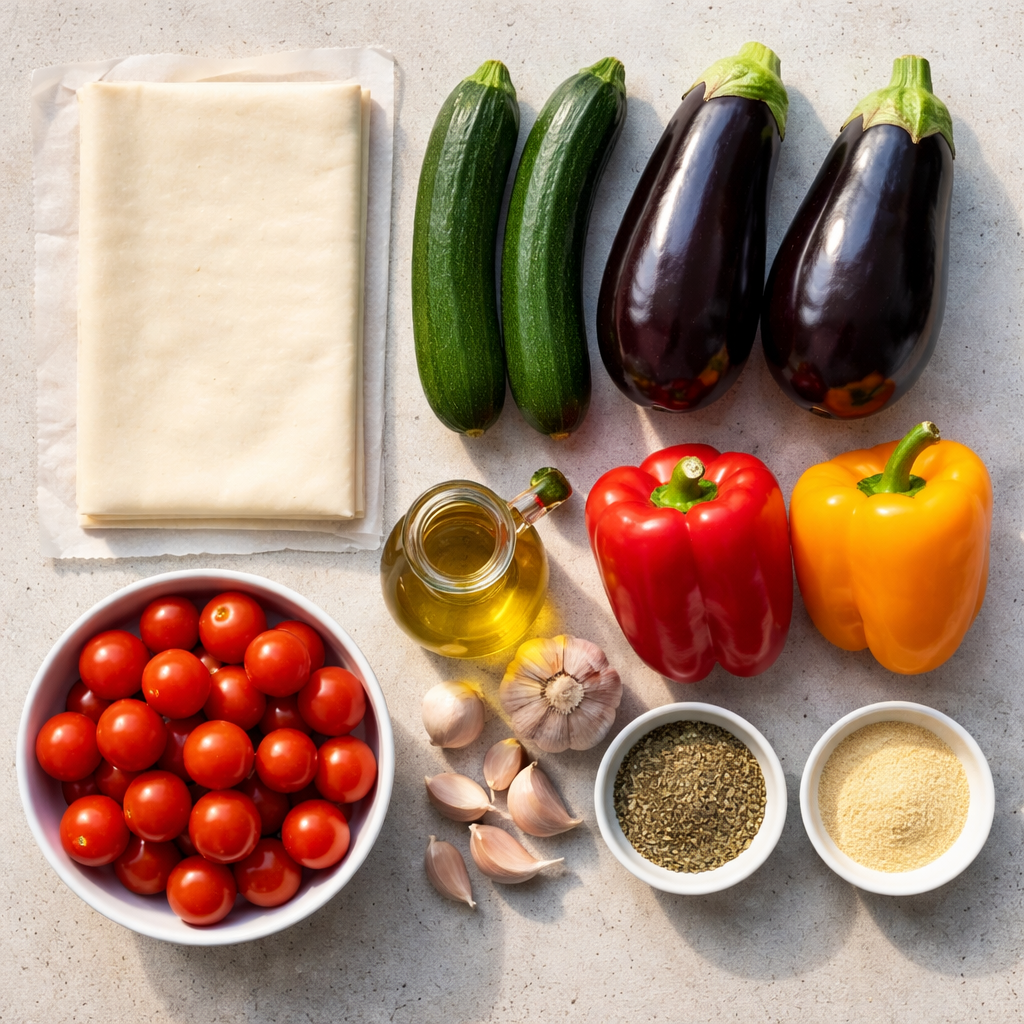
Here’s the full cast of characters:
- 1 sheet puff pastry, thawed but still cold
- 1 zucchini, thinly sliced
- 1 red bell pepper, diced
- 1 yellow bell pepper, diced
- 1 eggplant, diced
- 1 cup cherry tomatoes, halved
- 2 tablespoons olive oil
- 1 teaspoon dried oregano
- 1 teaspoon garlic powder
- Salt and pepper, to taste
- 1 egg, beaten (for egg wash)
Some notes from my very opinionated brain:
- Puff pastry: use all‑butter if you can find it; it puffs higher and tastes like your life is slightly more together. Frozen is fine; homemade puff pastry is for people who also iron their sheets.
- Veggies: this is a Mediterranean vibe, so think color and variety. If your grocery store zucchini look sad, grab extra bell peppers instead. Your galette, your rules.
- Olive oil: if you have a “good” bottle you hide from roommates/kids/significant others, this is a decent moment to use it—but honestly, your everyday oil is fine. Save the precious stuff for drizzling on something simple, like toasted bread or a gorgeous heirloom tomato situation.
Cooking Unit Converter:
If your brain short‑circuits when converting grams to cups (same), this quick tool keeps your measurements from turning into chaos math.
How to build this Mediterranean masterpiece without losing your mind
Here’s the step‑by‑step, with some lessons paid for in emotional damage:
Preheat the oven to 400°F (200°C).
Turn it on now, because puff pastry does not appreciate waiting for your indecision. Hot oven = tall, flaky layers. Lukewarm oven = pastry sadness.Toss the veggies.
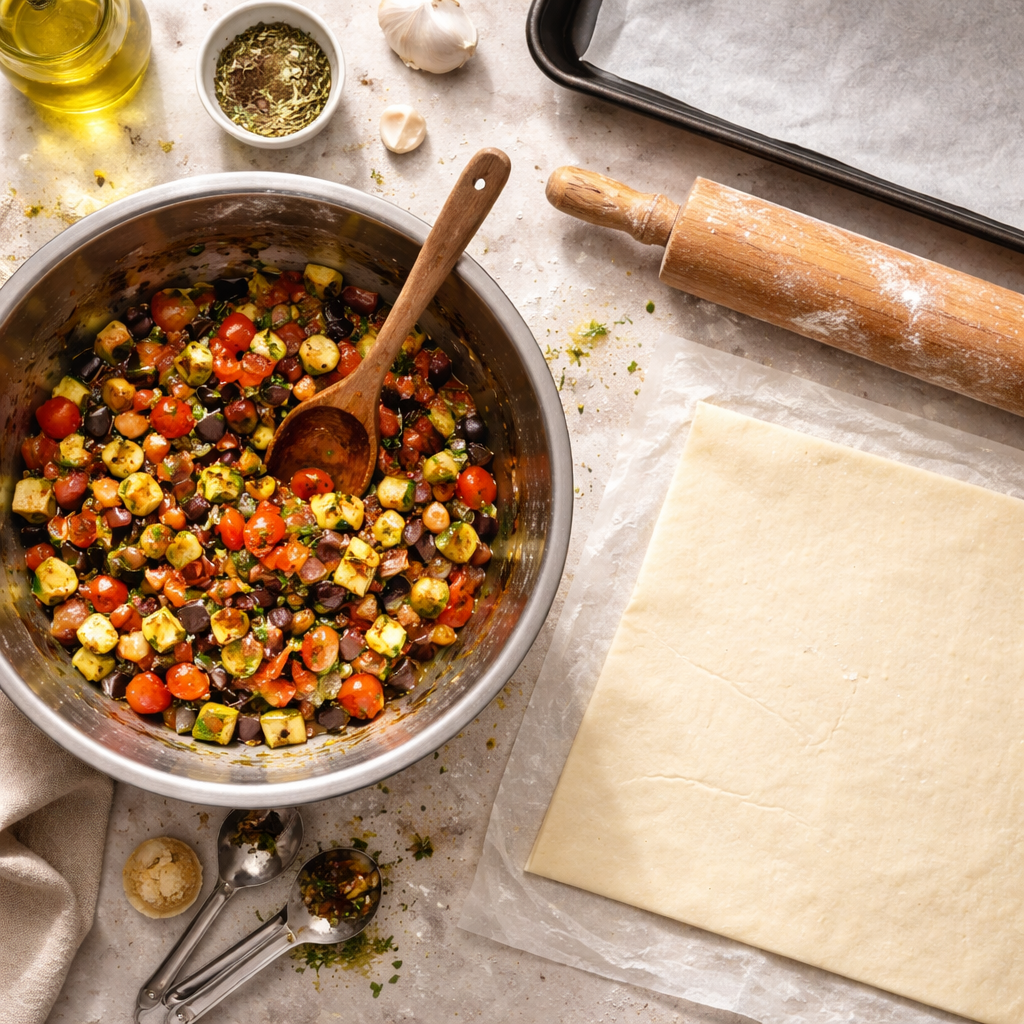
In a big bowl, add the zucchini, red and yellow bell peppers, eggplant, and cherry tomatoes. Drizzle with olive oil, sprinkle in the oregano, garlic powder, salt, and pepper.- Use your hands. Yes, they will get messy. Yes, it’s worth it. You want everything glistening and lightly coated, not swimming in oil.
Prep the puff pastry base.
Roll out the puff pastry on a baking sheet lined with parchment paper.- If it’s sticking, it’s too warm; if it’s cracking, it’s too cold. Welcome to the fun zone. Let it sit a minute if it cracks, or pop it in the fridge for a couple if it feels melty and untrustworthy.
Pile on the vegetables—but not like a maniac.
Spoon the vegetable mixture onto the center of the pastry, leaving about a 2‑inch border all the way around.- Try to keep the tomatoes more toward the middle; they leak juice like a gossiping aunt and can make the edges soggy.
Fold the edges into a rustic, charming mess.
Fold the borders over the filling, pleating as you go, so it looks intentionally uneven.- This is where past perfectionism goes to die. Uneven folds? Great. That’s called “character.”
Give it a glossy egg‑wash glow‑up.
Brush the exposed pastry with the beaten egg.- Don’t skip this. This is the difference between “Did a professional make this?” and “Did we forget to finish baking it?”
Bake until gloriously golden.
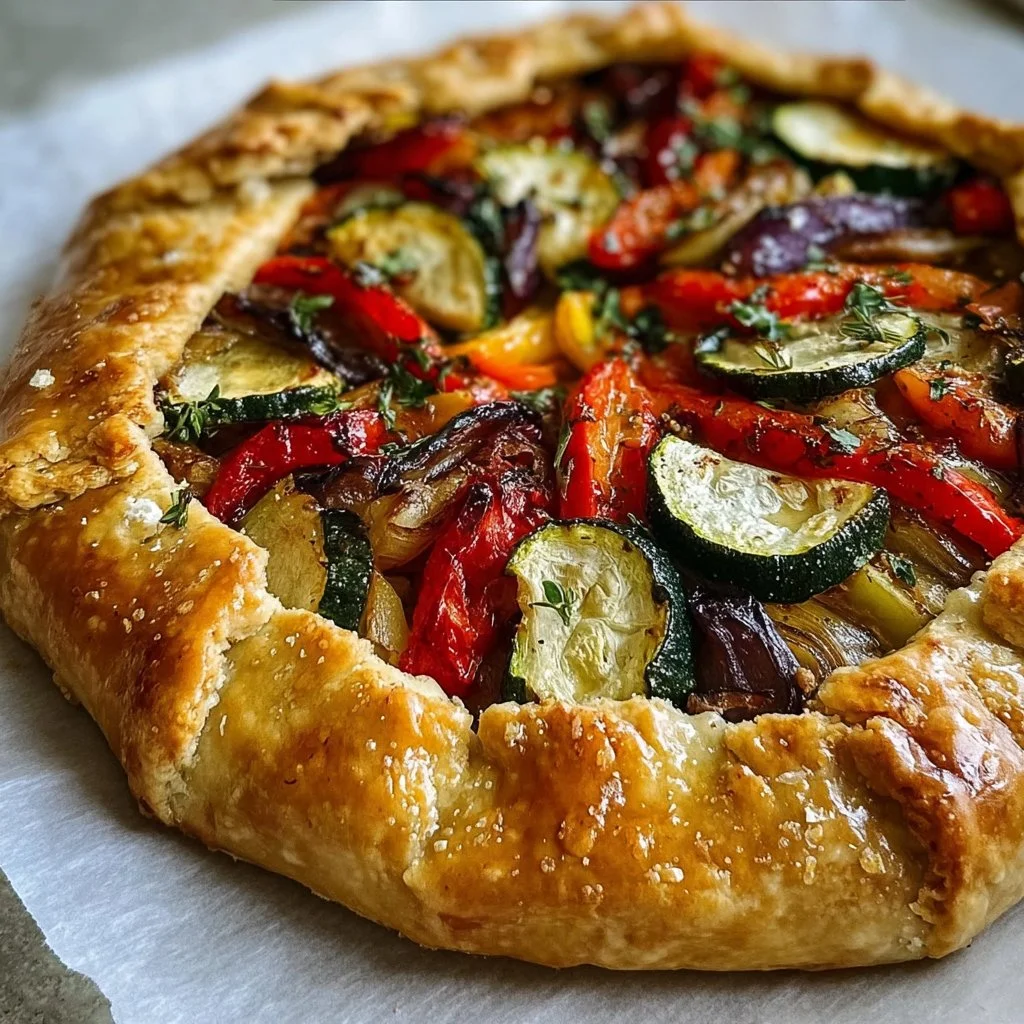
Bake for 30–35 minutes, or until the pastry is puffed, deep golden brown, and the veggies are soft with a little char on the edges.- If the edges are browning too fast, tent a strip of foil around the crust like a tiny, shiny crown.
Let it cool… a little.
Allow it to cool slightly before slicing—10–15 minutes is ideal.- Hot puff pastry will shatter and burn the roof of your mouth in one violent move. Ask me how I know.
Why this galette is weirdly personal for me
Cooking, for me, has always been the loudest love language. I grew up in a house where “I made extra” was basically “I love you” with more carbs. The first time I brought a galette like this to my family, my mom took one bite, nodded, and quietly moved it to the “good” side of the table. High praise.
This Mediterranean spin feels like my grown‑up palate finally catching up to my childhood comfort food brain: all the nostalgia of dough and roasted vegetables, but with the breezy, olive‑oil energy of a West Coast farmers market I definitely cannot afford to shop at weekly. Every time I fold that pastry over the vegetables, it feels like tucking in a little chaotic blanket of memories—holiday disasters, Sunday night experiments, late‑night leftovers eaten straight from the pan.
The time my galette became breakfast, lunch, and petty revenge
Once, I made this for a brunch where a friend said, “I’m not really a vegetable person.” Cool. I am not really a “respect that opinion” person, but okay.
Fast‑forward: the galette hits the table, and that same friend ends up taking home leftovers “for later.” Joke’s on them, because I had already planned to eat a cold slice for breakfast the next day with a fried egg on top, which, by the way, you absolutely should do. That moment sparked my deeply held belief that a good vegetable galette converts more people than any inspirational quote on Instagram.
Also, pro tip: this reheats beautifully on a sheet pan in the oven, especially if you’ve got one of those nice heavy pans like the kind I first saw recommended with a gorgeous sheet‑pan dinner recipe.
Frequently Asked Questions:
You can, but just know you’re choosing “cozy and dense” over “flaky drama queen,” which is fine, but the texture will be more like a veggie pie than a galette having its main‑character moment.
Nope, you can absolutely swap it for more zucchini, mushrooms, or even thinly sliced potatoes—eggplant is invited, not mandatory, like that one cousin at Thanksgiving.
Yes, and you should, because party‑you will be busy pretending you mopped recently. Bake it fully, let it cool, then reheat at 350°F until warmed through; it actually slices better after it’s had time to chill out.
A big green salad, some marinated olives, maybe a simple soup—this galette is the star, everyone else is supporting cast, like the side characters in a sitcom who quietly carry the whole show.
Add cheese. Always add cheese. Feta, goat cheese, or shredded mozzarella all play nicely here, and the Mediterranean will, I promise, survive your dairy choices.
Anyway, that’s the galette. It’s rustic, it’s forgiving, it tastes like summer vacation wrapped in buttery pastry, and it asks almost nothing of you except to turn on the oven and not panic when the folds look weird. Make it for a weeknight, make it for a potluck, make it when you need to prove to yourself that you can, in fact, cook something impressive without spiraling.
I’ll stop talking now. Go preheat the oven. The vegetables—and your ego—are waiting.
Daily Calorie Needs Calculator:
If you’re curious how this buttery beauty fits into your day, use this quick calculator to estimate your daily calorie needs before you go back for that (highly recommended) second slice.
Mediterranean Vegetable Galette
Ingredients
Method
- Preheat the oven to 400°F (200°C).
- In a big bowl, add the zucchini, red and yellow bell peppers, eggplant, and cherry tomatoes. Drizzle with olive oil and sprinkle in oregano, garlic powder, salt, and pepper.
- Use your hands to toss the vegetables until lightly coated.
- Roll out the puff pastry on a baking sheet lined with parchment paper.
- Spoon the vegetable mixture onto the center of the pastry, leaving about a 2-inch border.
- Fold the borders over the filling, pleating as you go.
- Brush the exposed pastry with the beaten egg.
- Bake for 30–35 minutes, or until the pastry is puffed and golden brown.
- Let the galette cool for 10–15 minutes before slicing.